Unfolding

I started hiding things before I had secrets.

Maybe it was my older brother’s influence. We grew up in separate households, and when I visited him during summer break, we would go out most nights with his friends. In the morning, my stepmom would ask “What did you do last night?” If we had seen a movie, he would say we were bowling. If bowling, he’d say Meijer. We didn’t drink, smoke or do drugs while we were out. He just didn’t want to be known, and obediently I followed his lead.

I started writing in middle school. By high school, I had joined the Natalie Goldberg school of automatic writing, with a goal to fill an 80-page notebook per month. Perpetually writing, I was even grounded from my notebook during one disagreement. My mom felt it was something I kept from her. Was I writing a story without her, or worse, about her? Both–it was my one true escape.

As an adult, writing has been mostly about remembering, processing. I keep a number of journals and logs at any time. Though I don’t write in each nearly every day, I have at this time: a cooking journal, hosting log, “meta” writing notebook, “feelings” journal, a poetry notebook, date books with daily notes, logs I keep for each of my daughters, and finally a journal I share with my 9 year old.

Writing can be relevatory–things naturally tend to become clearer in its practice. My writing was in competition with another habit that tends to hide things. If you saw “A Very Murray Christmas” a while back, you heard Bill Murray ask Paul Schaeffer whether he’s quit drinking yet, as if it’s inevitable. I always felt it was inevitable for me, and when I was finally ready to quit, I asked for help. I leaned on my husband, some close friends, and even went to some AA meetings.

During my AA experiment, I asked a stranger with five years’ sobriety to sponsor me. I met her at a fellowship meeting, where her friend was telling his AA narrative. I watched as she nodded knowingly and wiped away tears. I thought, this is the person for me. She sponsored me for a couple weeks. On one of our 3 or 4 phone calls, she chided me as I talked about going to school and moving. “You sound like me,” she said. “Don’t try to change so much at once. Live today; more will be revealed.” Hearing this set me ablaze with foolish pride. I thought, she’s been sober for years and is just now in school? Taking classes is just something I do. And “more will be revealed”? What is this, a fucking magic show?

I thought, she doesn’t know me. How I always rise to the occasion–whatever the cost (as if that’s a good thing). How big-screen and HD I see the world. How could anything possibly be revealed to me? I’m the revelator (I tip my hat to Gillian Welch for the term). Yet months of solo sobriety later, I could finally appreciate that she knew what it’s like to wake up from a fog, from the influence of something that dulls. The “more” to be revealed was what I had become so skilled at hiding from myself. As when a teacher walks by while you’re writing a note, I had been folding myself as if a page, covering one bit of myself at a time. Folding as if to put away, folding as if to put in order, folding as if to hide a stain. It was all there, just separated and stacked. You couldn’t see through me. I was a cootie catcher, with my scribbles tucked neatly inside.
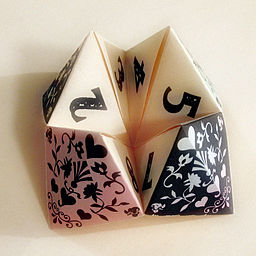
256px-Cootie_catcher

Pick a number. Pick a color. Unfold the corner. What’d you get? Drinking made it easier to hold fast the folds, and nothing would have been easier than to keep doing the same.

Today three years have passed, and I can tell you: I used to be a cootie catcher. And now I’m the flat, though thoroughly creased, paper. Two sides, that is all. It is revealed.
This Writing Is Inertia

I’ve been writing a lot lately. Somewhat cruelly, after years of trying to be taken seriously as someone who can produce marketing copy, it’s finally happened. One night Greg chirped “Maybe writing was your calling all along!” Indeed.

There are definitely pros to this professional writing development:

  • I’m super engaged at work. And my enthusiasm is leading to exciting new assignments
  • I’ve figured out lots of techniques that make writing less work, and less work to evaluate. That’s a big one, because if you can show that your work meets agreed upon objectives, as in any endeavor, individual opinion is less critical. It’s suddenly more of a “that works” than “i like it” discussion
  • Deadlines keep me in excellent shape. I’m happy getting up early to work on projects and still have stamina to put pencil to paper (pixels to webpages?) after the kids go to bed

I’ve been disappointed that one expectation–writing for work would be my warm up for personal writing–hasn’t quite taken. After sitting inert at my keyboard for a while this evening, I think I figured out why. What I crave in creative work is collaboration. I don’t need to come up with all the ideas, I don’t need to get all the credit. I truly love being elbow to elbow with someone else while we ask questions, push boundaries and make stuff happen on a project.

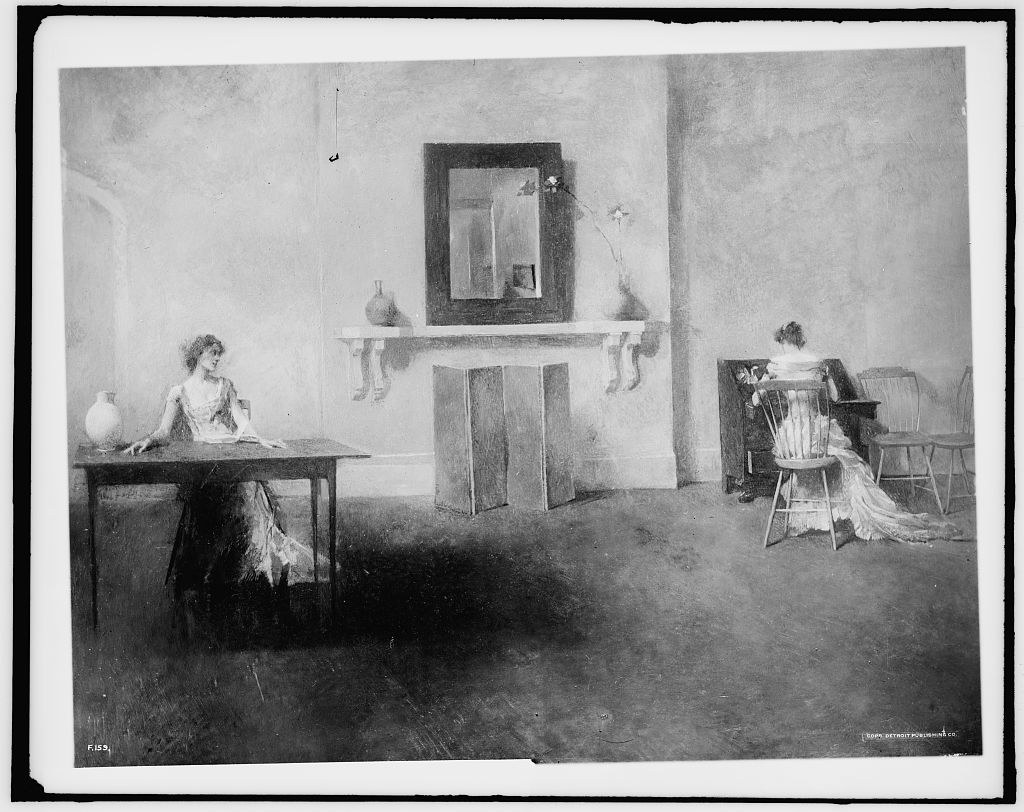
Writing a letter. Dewing (Detroit c. 1900)

Writing a letter. Thomas Wilmer Dewing (Detroit c. 1900)

Yet, I’m finally free and warmed up and ready to work on my stuff and…nada.

In my own work, it’s the structure collaboration brings that I miss. Collaboration shows me the shape of the space I need to fill with all these words. In truth, I just need an editor, and to grow up about how “lonely” writing is.

I’m Not Looking: a PSA for New Recruiters

A while ago, I was approached on LinkedIn by a recruiter*. I’m sharing this story because it’s outrageous and humorous, and a little part of me hopes it reaches the recruiter community, in an afterschool special-PSA sort of way. What follows is a complete transcript (with the recruiter’s identifying details removed) of the exchange, along my tips to new recruiters.

The original message from the recruiter:

Inmail: (name withheld)
Subject: IMMEDIATE OPENING

I came across your profile and was also wondering if you were in the job market or open to new opportunities? Below is a job description for a Practitioner / Jr. Project Manager with Application Development experience. If you’re interested please contact me at your earliest convenience, feel free to pass along my contact information as well if you might know someone in the market. Thanks again and I look forward to hearing from you.

[Company name withheld] has exciting opportunities available for Practitioner / Jr. Project Managers to help assist upper management manage application development projects. Work in a formal PMO that has set standards and procedures.

[…position details…]

The recruiter received my response:
The recipient declined your InMail for the following reason:

You lost me at “If you’re interested please contact me at your earliest convenience, feel free to pass along my contact information as well if you might know someone in the market.”

I’m not here to help you fill a position. If a recruiter is going to contact me, I want a clear indication that I’m a match for the position, or it’s not worth my time.

And I got this:
Subject: For Your Information

Sarah,

obviously you didn’t see the job description below for the Project Manager role. But with an attitude like yours please disregard the message because you would NOT be someone I’d consider working with. But if you happen to have a colleague who has a better attitude please feel free to pass along my contact information.

To which I responded:
If you want someone to take time to answer you, don’t start with “someone like you would work, too”. If you had started with what a strong candidate I am, or what a great work environment it is, or that you have other clients and would love to start a relationship, this conversation would be going differently. This isn’t about my “attitude”, it’s about your way of approaching someone with experience.

And then the recruiter sent this message:
I never said “someone like you would work, too”. So I’m not sure where you got that from. And after reviewing your profile and your resume, the average duration that you’ve held a job was 4 months…..So to be perfectly honest with you, I probably wouldn’t have proceeded. Thanks and goodbye.

And this epic exchange ended with my response:

You said “feel free to pass this on” which is the same thing. And for the record, I was [a] consultant while staying home with my kids, and 3 of my last “jobs” totaled over 5 years for the same employer. You want a person who keeps getting called back 😉

And I haven’t heard from this recruiter since. 

What peeves me about this exchange:

  1. This opportunity is too similar to what I’m already doing.
  2. This recruiter asked me name qualified, interested candidates and share my contacts. Wait, doesn’t that make me a recruiter?
  3. When I shared specific feedback, the recruiter insulted me–followed by a repeat request for access to my contacts.
  4. Who admits they had not reviewed a contact’s public profile/history?
Suggestions to a junior recruiter:
These are my suggestions for how the newbie recruiters might consider approaching someone who already has a place in the market.
  • Be professional. You’ve contacted someone without an invitation. Make sure your approach is respectful and consistently polite. If things go south, as in every other part of life, let the other guy be the jerk (you’ll look better when the exchange is through).
  • Be relevant. Read a target’s profile, not just their title, in considering whether they’re a match for a position. Don’t expect someone to make a lateral move (to another job that is essentially the same role or level).
  • Do the footwork. Do not (as in ever) ask someone you don’t know for their contacts, or for a referral. This breaks all the rules of referrals, which is are supposed to be based on mutual knowledge and trust. Referring someone you don’t know is a great way to ruin your reputation, and referrals that are gained this way are essentially empty.
  • Connect the dots. A stranger with a profile on a social network is not an applicant, this is someone you’re identifying as a potential match for the placement. Make sure they’re a strong candidate before you make contact, and share specifics about what makes them a good fit. No one wants to be on the receiving end of a copy-and-paste rampage, so make it worth their time.
  • Be enthusiastic. Talk up the opportunity, rather than relaying a laundry lists of responsibilities. People want to join something, and the idea of a great place finding you is irresistible. A great recruiter knows that, and creates that scenario for the people they contact.
OK, that’s all I’ve got. I hope this post elicits some more awesome “not looking” stories.

(* I’m not looking.)

Breaking BAB

After work tonight I helped Zinnia make dinner (a new undertaking on her part), and then I headed to meet a friend in Royal Oak. This required exiting westbound at Woodward, which I dislike in general because the exit is awkward and busy. As I reached the top of the exit, I saw something unusual for the area–there was a young couple on the service drive and Main St. intersection. The girl, slender with long blond hair, held a sign that read “BROKE TRAVELING HUNGRY”. The boy played guitar vigorously and sang with his head held high, as if he were used to projecting a distance. I checked how much time I had at the light and started looking for my wallet.

I don’t usually carry much money, and lately I don’t spend much either. All summer we’ve been on a pretty tight budget to save for a new house. I nicknamed it the BAB, or Boyce Austerity Budget. In my wallet, I had three singles and a twenty. I fished out the singles and looked their way. The girl darted across Main St. to meet another car and the boy wasn’t looking my way. I was in the wrong lane and at the wrong part of the intersection to pull over when the light turned green. I started driving on toward my original route, and I got that sick “I didn’t do the thing I want to do” feeling. I changed course to drive around the block, and by the time I made the second turn toward them, the feeling was stronger still. Before the final turn onto Main St., I exchanged the singles for the twenty.

Pulling up to the service drive, I was in the same spot the girl had just run to, but I couldn’t see them. Had they left with someone? When I reached the light, I realized they were there in their original spot. I honked to get their attention, and the boy smiled and waved as he ran over. I rolled down my window.

Today I’m a woman wearing department store makeup and driving a new minivan, but 20 years ago I was a bit of a hippie and dreamed of driving across country. As a once-child, I can imagine the excitement of setting out for the adventure, and as a grownup I can imagine the troubles they might be facing. And as a parent–I watched his tired eyes, her too-slim figure, and felt a spike of fear for them.

When he reached the van and saw the bill in my hand, he drew his hands in a prayer position of thanks and said “Thank you so much”. All I managed to say was “Be safe.” And I drove away worrying about them, wondering if their parents knew where they are, and hoping they’ll be OK, especially the girl with the long blond hair.

I’ve Got One Year

    While I won’t actually be 40 for a couple more months, I’m technically well into my 40th trip around the sun. Here’s a facebook post from the day before another milestone–my 20th high school reunion, in summer 2014:  “If I pull an all-nighter, can I finish my master’s and lose 20 lbs?” I went to that reunion, and despite my clever planning (Extra layer in case of lakefront breezes, check! Designated driver, check!), I forgot to eat dinner. No food was served, and while drunk at an afterparty I fell down the stairs (they: carpeted, I: strapped to 4″ cork wedge platforms). Sigh.
temp

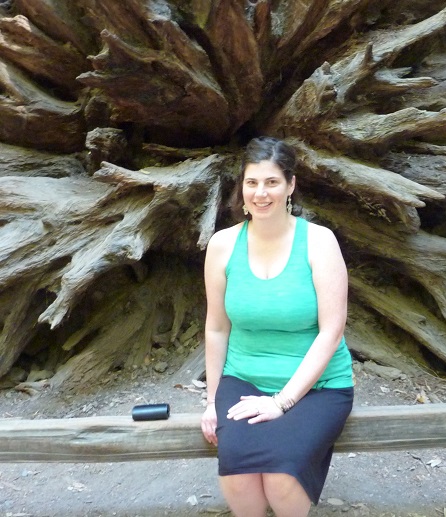
Beside a fallen Sequoia in coastal Northern California, September 2014.

    I’d like to say this story represents the only time I did something stupid while I was drinking, but that wouldn’t be true. I became determined, however, to make it exactly the last. After a lifetime in SE Michigan spent believing everyone but my Catholic grandmother (God rest her soul) was a drinker, I started considering a life without alcohol. I learned that more than a quarter of Americans don’t drink at all, for various reasons (see image from Statista, below). So, after one last hurrah (a September 2014 trip to Napa/Sonoma), I quit. Inspired by some other published lists, here’s what’s changed for me one year into life as a nondrinker:
  1. It was easy to lose weight when I gave up alcohol. I lost 25 lbs, and while I also retuned my diet and got back into the routine of exercise, cutting out craft beer was the true belly buster.
  2. Sleep is my friend. Except when I overdo it with the caffeine, which happens often. But for the most part, I’m well-rested.
  3. Waking up is no big deal. This is a half-lie, because I am a natural morning-hater. But, rather than feeling depleted like I used to after a night of drinking, I just feel regular old tired, which is a lot better than Dante’s Inferno/ring-of-hell tired.
  4. I don’t argue with my husband about who gets to have more than one drink at a party. He gets to have all the drinks; I drive. It does work out in his favor, but I think it works out in mine, too.
  5. I thought my friends would think it was weird if I didn’t drink. What I’ve learned is that no one really cares whether I drink, and it doesn’t stop anyone else from enjoying themselves.
  6. Refreshingly, I don’t want to drink, with the exception of a trip to Selden Standard in Detroit (how do they make cocktails look so ridiculously good?)–but I managed to power through. Now when we go out, I’m the DD. It makes sense; I have the minivan for the job.
  7. The nondrinking lifestyle is thrifty.
  8. To my surprise, when people find out I’ve stopped drinking, they’re pretty enthusiastic. At work, when word circulated of the change, they started adding “drinking optional” to the happy hour invite (which is a nice way to be inclusive, by the way).
  9. I have more of myself. I have more time to be me, to write and read and think about stuff. I have more energy to share with friends and family, so I can genuinely say “I’ll help you with that” instead of saying it and hoping they don’t really ask.
  10. I have more patience, time, and appreciation for my kids. And I’m modeling that adults can be happy, relaxed and fulfilled without drinking. This is the most important change for me, and my favorite reason to stick with my new lifestyle.

Used under the Creative Commons license, here’s data from Statista:
Infographic: Wealthy And Educated Americans Drink The Most | Statista
You will find more statistics at Statista